


Local Knowledge. Shore Results.
Before the first hard freeze, drain everything outside, insulate pipes in the cold spots, find your main water shutoff, check your chimney, and have a plan for any house that will sit empty. Leaving the heat on only protects a house while the power stays on.
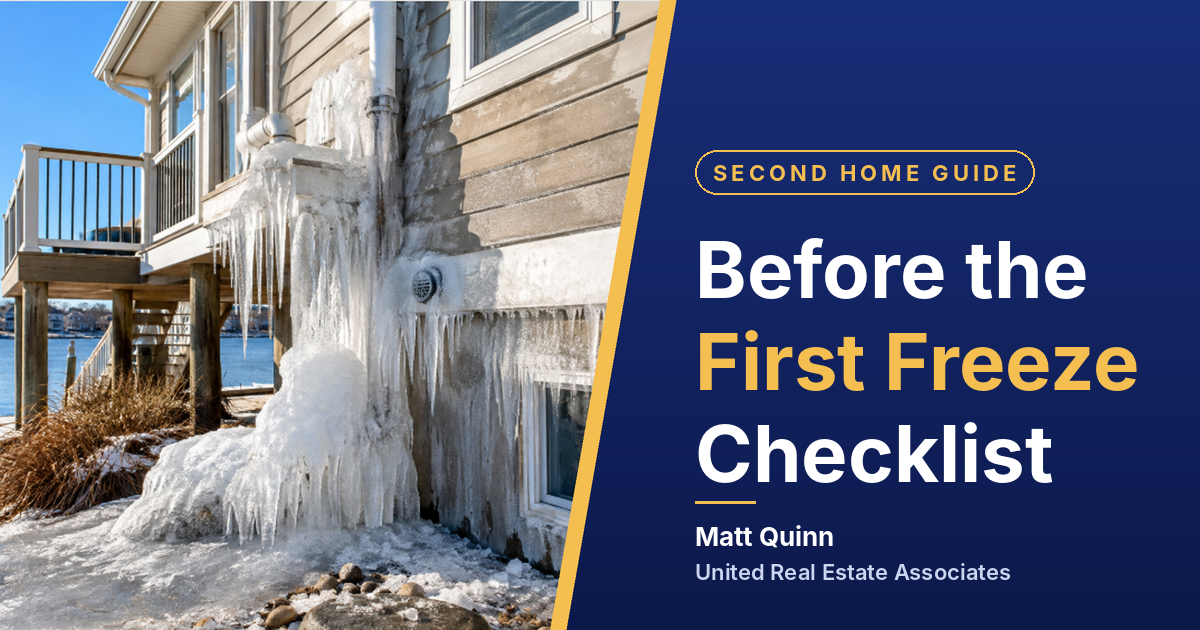
I had a listing in Ocean City, NJ. When I went to check on it, the house next door looked like the one in the photo above. It was a rental, and the heat had been left on. The temperature dropped into single digits, my guess is the power went out, and a pipe burst inside. I contacted the rental agency, and the agency notified the owner.
Most of what protects a house takes an afternoon and costs very little. This is the checklist I'd run before the temperature drops. It's general advice, so ask a licensed plumber about your own house.
Start Outside
Disconnect your garden hoses and drain your irrigation system. If you can shut off the water to an outdoor spigot from inside the house, do it, then open the spigot so it drains. Outdoor showers get the same treatment. A hose left connected can trap water against the faucet, and that water can freeze and push back into the pipe.
If you have a pool or a hot tub, call the company that opens and closes it before the cold arrives.
Protect the Cold Spots
Pipes in crawl spaces, garages and exterior walls are the ones at risk first. New Jersey American Water recommends wrapping exposed pipes with insulation or heat tape, and even fabric or newspaper helps in a pinch.
On the coldest nights, open the cabinet doors under sinks on exterior walls so warmer room air can reach the pipes. When the temperature stays below freezing, let a small trickle of water run overnight in the pipes most likely to freeze.
Know Where the Main Shutoff Is
If a pipe freezes or bursts, shut off the water right away. Find the main shutoff valve now, and make sure everyone in the house knows where it is. Turn it once to check that it works. A valve nobody has touched in years can be stuck, and you don't want to find that out with water on the floor.
Leaving the heat on only protects a house while the power stays on.
If the House Will Sit Empty
A house nobody is living in is the one most likely to go wrong quietly. That includes a seasonal home, a rental between tenants, a house between owners, and a listing that sits vacant over the winter.
New Jersey American Water suggests setting the thermostat to 55 degrees when you're away, and a freeze alarm that calls your phone if the indoor temperature drops below 45. Ask the alarm company whether it keeps working in a power outage. Have a friend, relative or neighbor check in person that the heat is working and the pipes are fine.
When I have a vacant home on the market in the winter, I check it every week to make sure everything is okay. When temperatures stay below freezing for an extended period, I check it two or three times a week.
For a house that will sit empty all winter, ask a plumber about winterizing it, which means shutting off the water and draining the system.
Check the Chimney
Birds and squirrels can build a nest in a chimney during the warmer months, and a nest or other debris can block the flue. The Chimney Safety Institute of America says animals may nest in a flue even when the chimney is rarely used. It follows a national standard, NFPA 211, that calls for chimneys, fireplaces and vents to be inspected at least once a year, including gas-fueled ones.
Have a chimney professional check yours before you light the first fire of the season.
If a Pipe Freezes
Shut off the water before you try to thaw anything, because a frozen pipe can have cracks you can't see. Warm the air around the pipe, or apply heat with a hair dryer, a space heater or hot water. Never leave a space heater unattended, and never use a kerosene heater or an open flame indoors.
Once the pipe thaws, turn the water back on slowly and check for leaks. If a pipe has burst, call a plumber and your insurance company.
A Few More Things Before Winter
Change the furnace filter and have your heating system checked before you need it. Test your smoke and carbon monoxide alarms. If you bought your home this year, this is your first winter in it, so find out where the pipes run through the cold parts of the house before the first freeze, not after.
Buying or selling a Shore home this winter and want a second set of eyes on what to check? Send me a message or call (609) 709-2742 and I'll walk you through it.
Matthew Quinn, United Real Estate Associates
(609) 709-2742
matt@mattquinnsellshomes.com